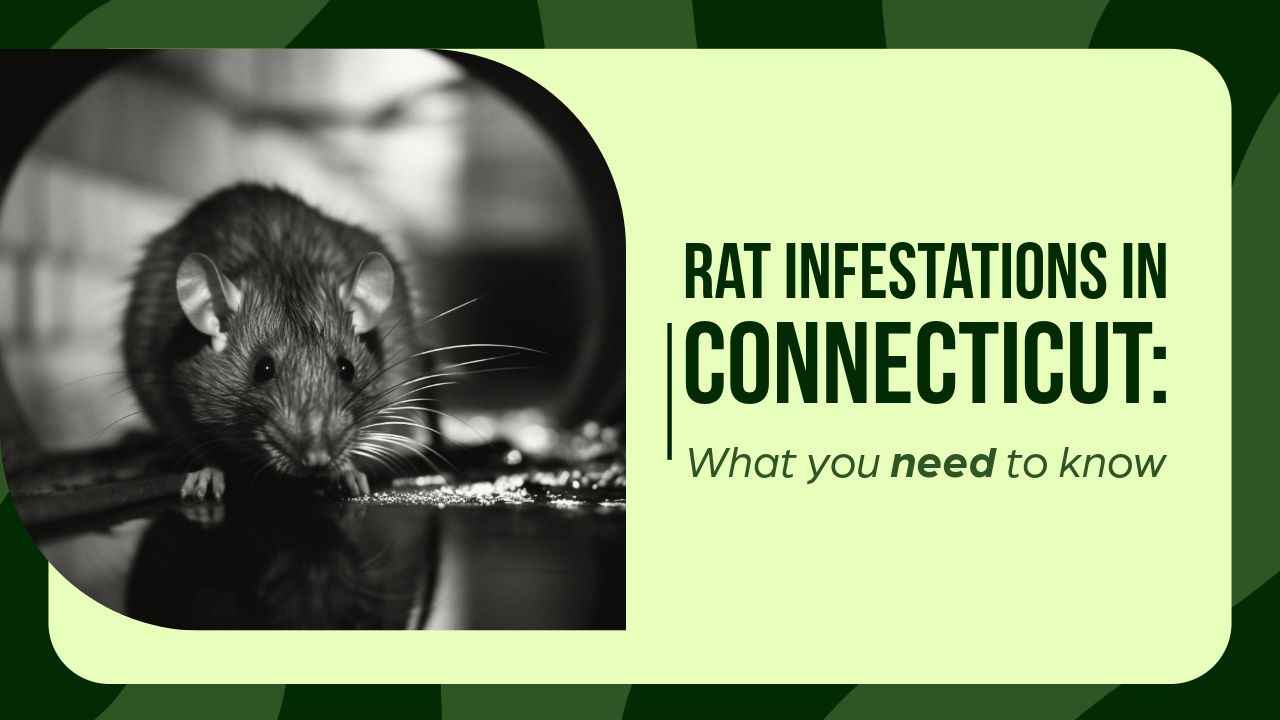
Discovering rats in or around your home is an unsettling experience. Whether you’ve noticed large droppings in your basement, heard movement beneath your floors, or spotted a rat near your garbage cans, these warning signs should never be ignored. Rat infestations can develop in residential neighborhoods, apartment complexes, commercial buildings, and rural properties throughout Connecticut, creating serious concerns for property owners and residents.
As colder weather settles into Connecticut, rats often search for dependable food sources, water, and protected places to shelter. Buildings provide plenty of opportunities, particularly when there are openings around foundations, damaged exterior materials, or easily accessible garbage and food storage areas. Once rats establish themselves on a property, eliminating them can become increasingly difficult without the right approach.
At Frattasios Family Pest Solutions, we understand the frustration and concern that come with discovering rats around your home or business. Professional rat control is about more than removing the rodents you can see. It’s about identifying where they’re coming from, understanding what’s attracting them, and addressing the conditions that allow them to remain on your property.
Why Rat Problems Become More Noticeable During Cold Weather
Rats are active throughout the year, but colder temperatures can change where they look for food and shelter. During the fall and winter, protected spaces such as basements, garages, crawl spaces, sheds, and commercial buildings may become especially attractive. Rats may also establish burrows beneath outdoor structures, around foundations, and in areas where they can remain sheltered from harsh weather.
Connecticut properties offer a variety of environments where rats can thrive. Urban neighborhoods may provide access to dumpsters, restaurant waste, and underground infrastructure, while suburban and rural properties may offer bird feeders, animal feed, compost piles, and outdoor storage areas. Rats are highly adaptable and can take advantage of food and shelter wherever they find it.
A rat problem doesn’t necessarily mean a property is dirty or poorly maintained. Even well-kept homes and businesses can experience infestations when rodents discover an accessible entry point or a nearby food source. Rats can travel between neighboring properties, which means activity around one building may be connected to conditions elsewhere in the surrounding area.
For homeowners in Windham County, Tolland County, Greater Hartford, and communities throughout Connecticut, recognizing the conditions that attract rats can help prevent a small problem from becoming a persistent infestation.
How Rats Find Their Way Into Connecticut Homes and Buildings
Rats are strong, persistent rodents capable of squeezing through surprisingly small openings. Depending on the species and size of the animal, an opening roughly the size of a quarter may be large enough for a rat to enter. They can also gnaw through certain building materials, enlarge existing gaps, and take advantage of damaged structural areas.
Common entry points include openings around plumbing and utility lines, gaps beneath exterior doors, damaged foundation vents, deteriorating masonry, and holes around basement windows. Rats may also enter through damaged sewer connections or other structural openings, particularly in older buildings.
Norway rats, which are commonly associated with ground-level activity, frequently establish burrows near foundations, beneath concrete slabs, and around outdoor structures. Roof rats, where present, are skilled climbers and may use trees, utility lines, and elevated building features to reach upper areas.
Because rats are often most active at night, homeowners may not realize how they’re entering a building. By the time one is spotted inside, it may already have an established route between its shelter and a food source.
Finding and addressing these entry points is a major part of effective rat control. Removing rodents without correcting the conditions that allow them to enter can leave the property vulnerable to repeated infestations.
Common Warning Signs of a Rat Infestation
Rats generally prefer to avoid people, making it possible for an infestation to develop without frequent sightings. Recognizing the evidence they leave behind can help property owners identify a problem earlier.
Large Rodent Droppings
Rat droppings are generally larger than mouse droppings and may be discovered near food storage areas, along basement walls, inside garages, or around outdoor structures. Fresh droppings can indicate recent activity, although their appearance alone isn’t always enough to determine how recently rodents were present.
Scratching, Gnawing, and Movement at Night
Rats moving through walls, beneath floors, or above ceilings can produce scratching, scurrying, and gnawing sounds. These noises may be especially noticeable during the evening or overnight hours when household activity is minimal.
Gnaw Marks and Damaged Materials
Rats regularly gnaw on materials to maintain their continuously growing teeth. Damage may appear on wood, plastic containers, insulation, packaging, and even electrical wiring. Larger gnaw marks can help distinguish rat activity from that of smaller rodents.
Burrows Around the Property
Norway rats frequently create underground burrows near foundations, retaining walls, sheds, decks, and other sheltered locations. These openings may be accompanied by disturbed soil or repeated rodent activity in the surrounding area.
Grease Marks and Travel Paths
As rats repeatedly move along walls and other surfaces, oils and dirt from their fur can leave dark smudges. Well-used outdoor pathways may also become visible in grass, soil, or vegetation.
Unusual Odors
An established infestation may produce unpleasant odors from urine, droppings, nesting materials, or deceased rodents in concealed areas. Persistent odors should be investigated, particularly when accompanied by other signs of activity.
Not every warning sign confirms a rat infestation, but finding several of them is a strong reason to schedule a professional pest inspection.
The Property Damage Rats Can Cause
Rats are capable of causing substantial damage when they establish themselves inside buildings. Their constant gnawing, nesting behavior, and movement through concealed spaces can affect numerous parts of a property.
One of the more concerning risks involves electrical wiring. Rats may chew through protective wire coverings, potentially exposing electrical components and increasing the risk of electrical failures or fires. Damage hidden inside walls or ceilings can be particularly difficult for homeowners to detect.
Insulation is another common target. Rats may tear apart insulation to create nesting areas, reducing its effectiveness and leaving behind contamination. In attics, crawl spaces, and wall cavities, this damage can remain unnoticed for extended periods.
Stored belongings, cardboard boxes, plastic containers, and building materials may also be damaged. In garages and sheds, rats sometimes chew through stored supplies or establish nests in equipment that remains unused during the winter.
Outdoor activity can create additional problems. Rat burrows near patios, walkways, foundations, and landscaping features may disturb soil and contribute to localized structural concerns.
The longer an infestation continues, the greater the opportunity for damage to accumulate. Addressing the problem promptly can help reduce the risk of more expensive repairs.
Health and Sanitation Concerns Associated With Rats
Beyond the damage they can cause, rats create legitimate health and sanitation concerns. Rodents can carry disease-causing organisms and contaminate areas through droppings, urine, saliva, and contact with food or surfaces.
Certain diseases associated with rats include leptospirosis, rat-bite fever, and salmonellosis. The specific risks depend on the circumstances, exposure, and organisms present, but rodent contamination should always be taken seriously.
Kitchens, pantries, food storage rooms, and commercial food preparation areas are particularly concerning because rats may come into contact with food products and preparation surfaces. Food that has been chewed or contaminated should be discarded, and affected areas should be cleaned using appropriate safety procedures.
It’s important not to sweep or vacuum dry rodent droppings, as disturbing contaminated material can release particles into the air. The Centers for Disease Control and Prevention recommends specific precautions for cleaning rodent-contaminated areas.
For households with children, pets, elderly residents, or individuals with certain health concerns, addressing rodent activity promptly is especially important.
Professional rat control can help reduce ongoing rodent activity, while proper sanitation and cleaning help address contamination that may remain after the infestation is controlled.
Why DIY Rat Control Often Fails to Solve the Problem
When rats appear, many property owners turn to store-bought traps, bait products, or home remedies. While certain traps can be effective when used correctly, controlling an established rat infestation usually requires a more thorough strategy.
Rats can be cautious around unfamiliar objects, including newly placed traps. They may avoid devices that are poorly positioned or placed away from their regular travel routes. Homeowners may catch one or two rats and assume the problem is resolved, only to discover continued activity days or weeks later.
Another challenge is determining where the rodents are nesting. Rats may live beneath foundations, inside inaccessible structural areas, or outdoors while entering a building primarily to search for food. Without identifying their nesting locations and travel patterns, treatment efforts may fail to reach the source of the infestation.
Some homeowners also rely on repellents or strong-smelling household products in an attempt to drive rats away. These methods generally do not provide reliable, lasting control of an established infestation.
Improper use of rodent bait can create additional safety concerns for children, pets, and non-target wildlife. Rodenticides must be used according to their labels and applicable regulations.
Most importantly, trapping or baiting alone doesn’t correct the conditions attracting rats to the property. Accessible garbage, damaged exterior openings, standing water, and nearby nesting areas may continue supporting rodent activity.
Professional rat control addresses these factors together rather than relying on a single method.
How Professional Rat Control Addresses the Source
A professional pest control inspection helps determine the extent of rat activity and identify the areas that require attention. Since every property is different, effective treatment should be based on the building’s structure, surrounding environment, and evidence of rodent movement.
Pest control professionals can examine suspected entry points, identify likely travel routes, evaluate nesting areas, and recommend appropriate control measures. Depending on the situation, treatment may involve strategically placed traps or other approved rodent control methods.
Professionals can also help identify sanitation and maintenance concerns that may be contributing to the infestation. These might include unsecured garbage containers, gaps around utility penetrations, cluttered storage spaces, or conditions around exterior structures.
Entry-point sealing and rodent exclusion are particularly important for reducing the likelihood of future problems. Appropriate repairs help prevent new rats from using the same access routes after existing activity has been addressed.
Monitoring and follow-up may also be necessary to determine whether the infestation is responding to treatment. Since rats can be difficult to eliminate when nesting areas remain active, checking progress is an important part of the process.
For homeowners and business owners who have already tried multiple products without success, professional rat control can provide a more organized and effective way to address the problem.
Rat Problems in Apartment Buildings and Rental Properties
Rat infestations can be especially challenging in apartments, condominiums, and other multi-unit properties. Shared walls, utility spaces, basements, storage areas, and outdoor garbage collection locations can allow rodents to move between different parts of a building.
A resident may notice rats near a kitchen or basement even when the actual nesting location is somewhere else on the property. Treating one apartment without examining shared areas or nearby units may leave the larger infestation unresolved.
For landlords and property managers, rodent activity can create concerns involving tenant safety, property maintenance, sanitation, and potential building damage. Prompt attention to reported sightings and signs of infestation can help prevent the problem from spreading.
An effective approach may require cooperation between residents, property management, maintenance personnel, and pest control professionals. Addressing garbage storage, structural openings, and common areas can be just as important as treating individual units.
Professional inspections can help identify where activity is concentrated and determine which areas need attention.
Protecting Connecticut Businesses From Rat Infestations
Rat problems aren’t limited to residential properties. Restaurants, warehouses, retail stores, offices, apartment complexes, and other commercial facilities can experience rodent activity, particularly where food, water, storage materials, or shelter are readily available.
For businesses, the consequences may extend beyond physical damage. Rodent contamination can affect sanitation, stored products, customer confidence, and compliance with applicable health requirements.
Restaurants and food-related businesses face particular challenges because rats may be attracted to food waste, deliveries, dumpsters, and storage areas. Commercial buildings with loading docks, utility penetrations, and frequently opened exterior doors may also provide opportunities for rodents to enter.
Routine inspections, proper sanitation, structural maintenance, and professional pest management can help businesses identify potential problems before they become more serious.
Whether a property is located in a busy Hartford commercial district or a smaller Connecticut community, taking rodent activity seriously helps protect employees, customers, and the building itself.
Steps Connecticut Property Owners Can Take to Discourage Rats
Although an established infestation often requires professional attention, property owners can take practical steps to make their homes and buildings less attractive to rats.
Begin by examining outdoor garbage storage. Trash containers should have secure lids, and food waste should not be left exposed. Garbage collection areas should be cleaned regularly to remove spilled food and debris.
Pet food, livestock feed, birdseed, and other potential food sources should be stored in sturdy, rodent-resistant containers. Avoid leaving pet food outdoors overnight, and clean up spilled birdseed around feeders.
Keep vegetation trimmed around foundations and remove unnecessary clutter from garages, sheds, and outdoor storage areas. Firewood and other materials should be stored away from exterior walls when possible.
Inspect exterior doors, vents, foundation openings, and utility penetrations for damage. Any suspected rodent entry points should be evaluated and sealed with appropriate materials, ideally as part of a coordinated control plan so rodents aren’t trapped inside inaccessible spaces.
Water sources should also be addressed. Leaking outdoor faucets, standing water, and drainage problems may provide rats with additional reasons to remain nearby.
These preventive measures are valuable, but they should not replace professional treatment when rats are already established inside or around a building.
Why Waiting Can Make a Rat Infestation Worse
It’s tempting to ignore a possible rat problem when sightings are infrequent or activity seems limited to a basement, garage, or outdoor area. Unfortunately, rats are capable of reproducing quickly when conditions are favorable, and their activity may expand as they discover additional food sources and nesting locations.
An infestation that begins around an outdoor shed or garbage area can eventually affect nearby structures. Rats may continue exploring openings around a home, especially during colder weather when protected indoor spaces become attractive.
Delaying treatment also allows more time for property damage and contamination. Hidden gnawing damage, deteriorating insulation, and repeated contact with food storage areas can become more difficult and costly to address.
Even if a rat hasn’t been seen for several days, that doesn’t necessarily mean the infestation has disappeared. Rodents may change their travel patterns, remain hidden, or become active primarily when people aren’t nearby.
If you’re repeatedly noticing droppings, burrows, gnaw marks, or nighttime movement, scheduling a professional inspection is a sensible next step.
Get Professional Rat Control in Connecticut
Rat infestations can be stressful, damaging, and difficult to manage without professional assistance. Whether you’ve discovered rats inside your basement, noticed burrows around your foundation, or are dealing with recurring activity near your apartment building or business, identifying the source of the problem is essential.
At Frattasios Family Pest Solutions, we help Connecticut homeowners, landlords, property managers, and businesses address pest problems with professional pest control services. We proudly serve communities throughout the entire state, including Windham County, Tolland County, Greater Hartford, and surrounding Connecticut areas.